Plate No. 19
Moonstones
Pachyphytum oviferum
"Pastel pebbles in a quiet rosette"
Native to
Cliffs of San Luis Potosí, central Mexico

Identification
Is this your plant?
Compare these reference photographs to help identify a moonstones in your own collection.
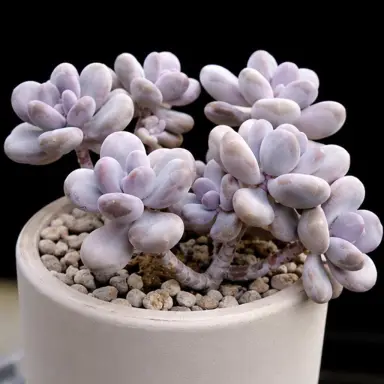 Whole plant
A Moonstones shown in full — overall shape and habit.
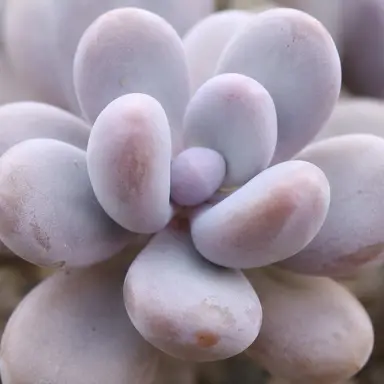 Leaf detail
Close-up of Moonstones leaves — texture, color, and edges.
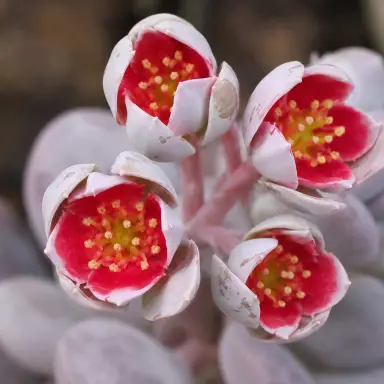 Flowers
Moonstones in bloom — flower form and color.
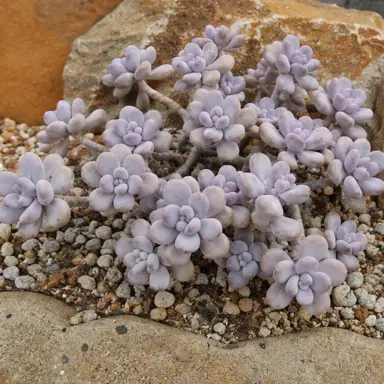 Growth form
Moonstones growing habit — stems, base, and offsets.
History
A brief account
Moonstones (Pachyphytum oviferum) is one of the most elegant succulents in cultivation, admired for its plump, rounded leaves that appear dusted with a soft pastel bloom. Native to the steep rocky cliffs of San Luis Potosí in central Mexico, it grows in crevices where excellent drainage and seasonal rainfall allow it to survive long dry periods. The thick leaves act as water reservoirs, while their powdery wax coating, known as farina, reflects intense sunlight and helps reduce moisture loss.
The species was first collected around 1909 by the German botanist Joseph Albert Purpus, whose explorations introduced many remarkable Mexican succulents to horticulture. The species name oviferum means “egg-bearing,” a reference to the smooth, rounded leaves that resemble small polished eggs. During spring and early summer, mature plants produce graceful flower stalks carrying small, bell-shaped flowers with creamy white petals and vivid red interiors, adding an unexpected splash of colour to the plant’s soft blue-grey foliage.
How to care for
Moonstones thrive in bright light with several hours of gentle morning sun, which helps maintain their compact shape and attractive pastel colouring. Plant them in a very free-draining cactus or succulent mix and water only after the soil has dried completely. Like many fleshy succulents, they are far more tolerant of drought than excessive moisture, and overwatering can quickly lead to root rot.
One of the plant’s most distinctive features is its powdery coating of farina, which protects the leaves from strong sunlight and water loss. Avoid touching the leaves whenever possible, as fingerprints permanently remove this natural coating and leave visible marks. Given plenty of light and careful watering, Moonstones remain compact, beautifully coloured and exceptionally long-lived.
How to propagate
Moonstones are wonderfully easy to propagate, although they reward a gentle touch. Healthy leaves can be carefully twisted from the stem and placed on the surface of dry, well-drained succulent mix. Over time they produce tiny roots, followed by a miniature rosette that gradually develops into a new plant while the original leaf slowly shrivels away.
Stem cuttings can also be rooted if a plant becomes leggy, allowing older specimens to be rejuvenated while creating new plants at the same time. Because the leaves bruise easily and the protective farina rubs off with handling, it’s best to disturb the plant as little as possible during propagation. With patience, even a single healthy leaf can grow into a beautiful new Moonstones plant.
Cultivation
Quick tips for care & planting
- Light
- Bright direct light; the farina deepens its lavender hue.
- Water
- Sparingly. Handle by the stem, not the leaves — the bloom rubs off.
- Soil
- Loose, gritty succulent mix.
- Temperature
- 10–27°C. Frost-tender.
- Propagation
- Remove a healthy leaf and lay it on dry soil until it roots.