Plate No. 01
Echeveria
Echeveria elegans
"The painted rosette"
Native to
Semi-desert regions of Mexico, particularly Hidalgo

Identification
Is this your plant?
Compare these reference photographs to help identify a echeveria in your own collection.
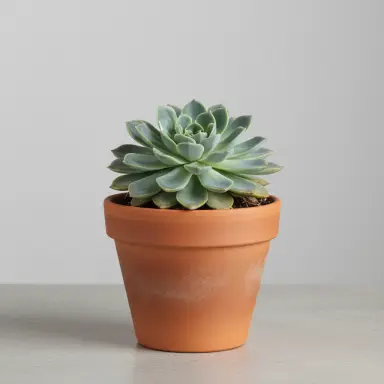 Whole plant
A Echeveria shown in full — overall shape and habit.
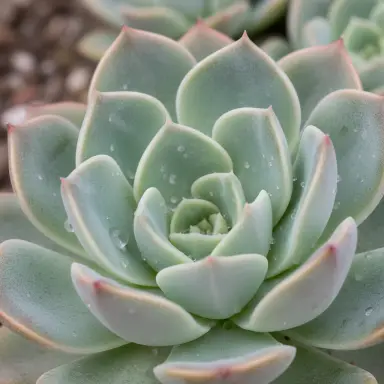 Leaf detail
Close-up of Echeveria leaves — texture, color, and edges.
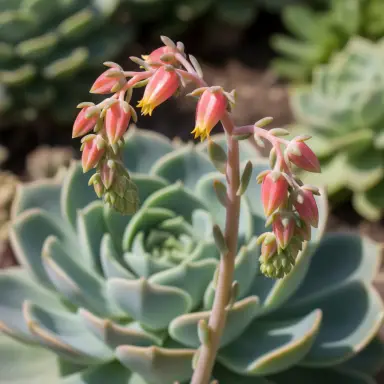 Flowers
Echeveria in bloom — flower form and color.
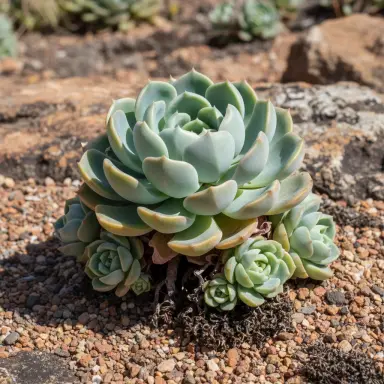 Growth form
Echeveria growing habit — stems, base, and offsets.
History
A brief account
Echeveria elegans is one of the best-known and most widely cultivated succulents in the world. The genus was named in honour of Atanasio Echeverría y Godoy, an 18th-century Mexican botanical illustrator whose detailed paintings documented the remarkable flora of New Spain. Native to the rocky hillsides of central and northeastern Mexico, Echeveria elegans evolved to thrive in dry, sunny environments where its tightly packed rosettes help conserve water and protect the growing centre from harsh conditions.
By the mid-1800s, Echeverias had become highly sought-after specimens in Victorian glasshouses and botanical collections throughout Europe. Their near-perfect geometric symmetry and soft blue-grey colouring captivated collectors, and they remain among the most recognisable ornamental succulents today. During the mid-20th century, their clean architectural form made them favourites of modernist designers, appearing in homes, courtyards and gardens around the world. Often called the Mexican Snowball, Echeveria elegans is admired for its sculptural beauty, compact habit and ability to produce elegant colonies through numerous offsets.
How to care for
Easy to grow and exceptionally rewarding, Echeveria elegans thrives in bright light with several hours of gentle morning sun or strong indirect light indoors. Outdoors it prefers a sunny position with protection from intense afternoon heat in very hot climates. Plant it in a free-draining cactus or succulent mix and allow the soil to dry completely before watering again. Water should always be directed onto the soil rather than into the centre of the rosette, where trapped moisture can lead to rot.
Its fleshy blue-green leaves are naturally coated with a fine powdery bloom, known as farina, which helps protect the plant from strong sunlight and water loss. Avoid handling the leaves unnecessarily, as fingerprints can permanently remove this protective coating. During spring and summer, mature plants send up graceful arching flower stems bearing pink flowers tipped with yellow, creating a beautiful contrast against the cool-toned foliage. With minimal care, Echeveria elegans can remain attractive for many years.
How to propagate
Echeveria elegans is one of the easiest succulents to propagate. Mature plants naturally produce offsets, often called “chicks,” around the base of the main rosette. Once these have developed a small root system, they can be gently separated and replanted to produce new plants. Healthy leaves can also be removed carefully and placed on dry succulent mix, where they will gradually produce roots and tiny new rosettes.
Propagation is best carried out during the active growing season in spring or early summer. Allow any cut surfaces to dry and callus before planting to reduce the risk of rot. Given enough space, a single plant will gradually develop into an attractive clump of perfectly formed rosettes, making it an ideal succulent for sharing, container displays and rock gardens.
Cultivation
Quick tips for care & planting
- Light
- Bright, direct sunlight for 4–6 hours daily. A south-facing windowsill is ideal.
- Water
- Soak and dry. Water deeply only when soil is bone dry — roughly every two to three weeks.
- Soil
- Gritty, fast-draining cactus mix amended with pumice or coarse sand.
- Temperature
- Comfortable between 15–27°C. Protect from frost.
- Propagation
- Gently twist off a healthy leaf, callous for two days, then set on dry soil to root.