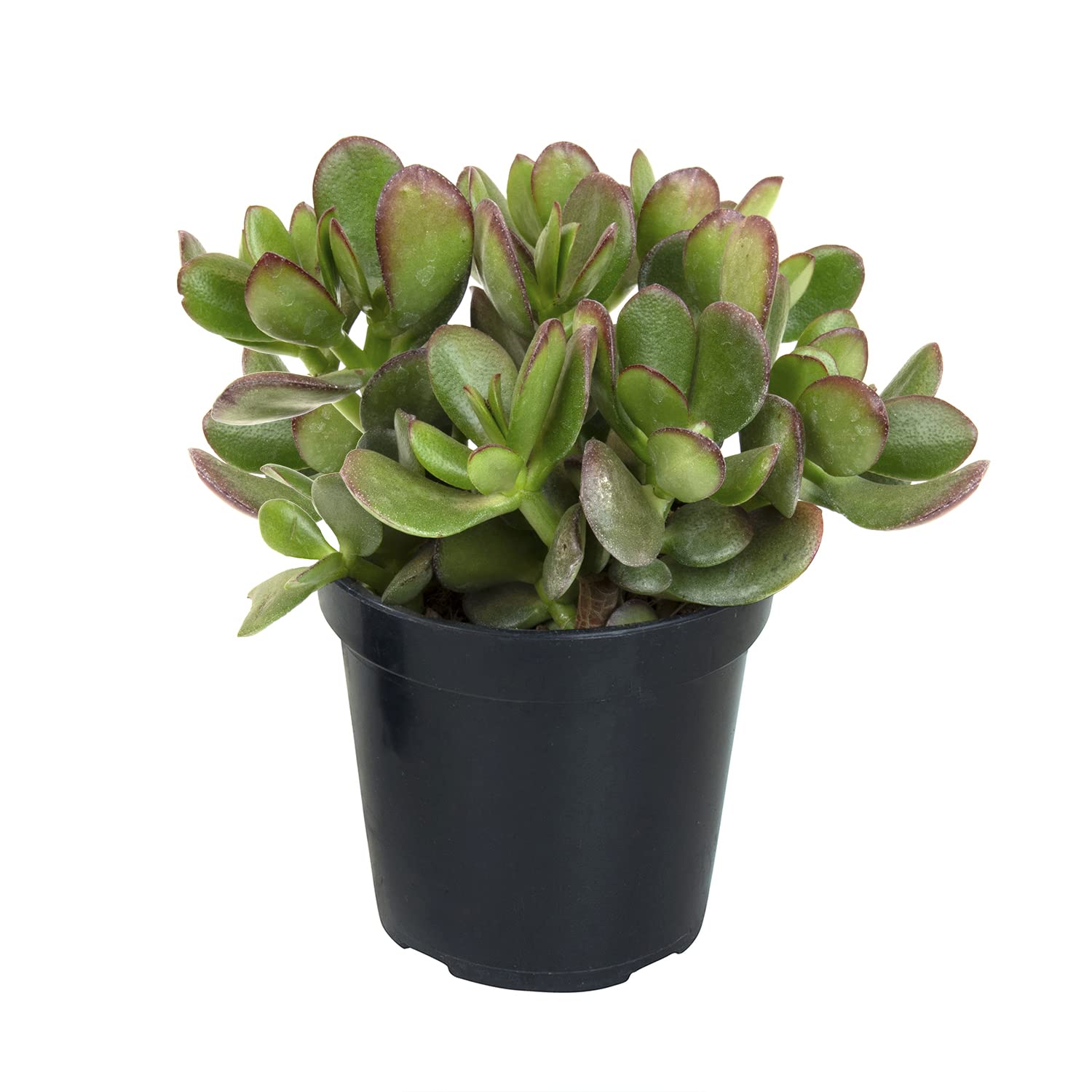
Plate No. 02
Jade Plant
Crassula ovata
"The money tree of fortune"
Native to
KwaZulu-Natal and Eastern Cape provinces of South Africa

Identification
Is this your plant?
Compare these reference photographs to help identify a jade plant in your own collection.
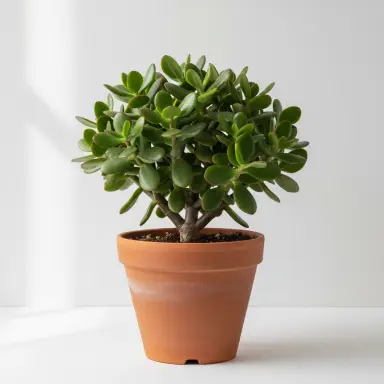 Whole plant
A Jade Plant shown in full — overall shape and habit.
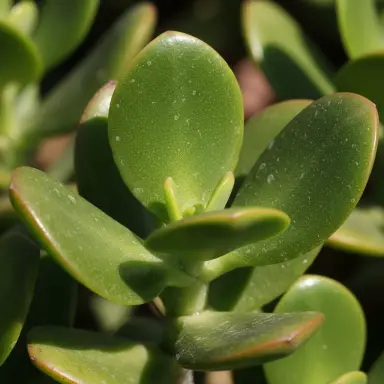 Leaf detail
Close-up of Jade Plant leaves — texture, color, and edges.
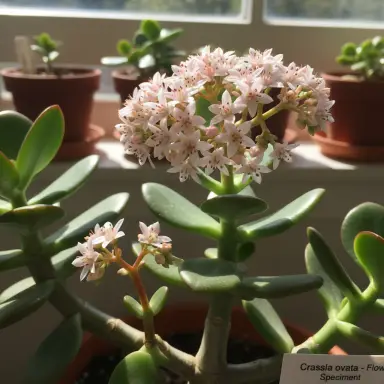 Flowers
Jade Plant in bloom — flower form and color.
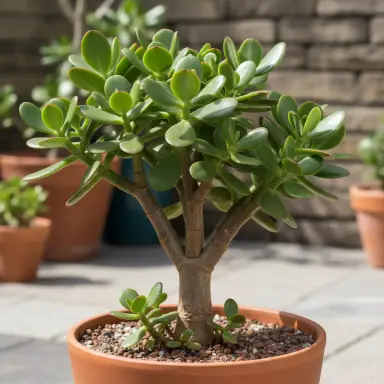 Growth form
Jade Plant growing habit — stems, base, and offsets.
History
A brief account
The Jade Plant (Crassula ovata) has long been regarded as a symbol of prosperity, wealth and good fortune. In Chinese tradition it is often placed near the entrance of homes and businesses to attract positive energy, financial success and lasting prosperity, earning it popular names such as the money plant, lucky plant and friendship tree. Native to the dry regions of South Africa and Mozambique, it spread naturally along East African trade routes before Dutch settlers introduced it to European collectors during the 1700s. Its thick, glossy, coin-shaped leaves further strengthened its association with wealth and abundance.
Jade Plants are remarkably long-lived, with some specimens surviving for well over 100 years. As they mature, their stems gradually develop into thick, woody trunks, giving older plants the appearance of miniature trees and making them highly prized for bonsai cultivation. During the cooler, shorter days of winter, established plants may reward growers with clusters of delicate white or pale pink, star-shaped flowers. Combined with its reputation for longevity and resilience, the Jade Plant has become one of the world’s most enduring and recognisable succulent houseplants.
How to care for
One of the reasons the Jade Plant remains so popular is its reputation as an exceptionally easy-care succulent. It thrives in bright light, ideally with several hours of direct morning or afternoon sun, although it also performs well in a sunny indoor position. Plant it in a free-draining cactus or succulent mix, preferably in a pot with drainage holes. Water thoroughly only when the soil has dried out completely, as overwatering is the most common cause of problems. During winter, reduce watering significantly while the plant’s growth slows.
Jade Plants are slow-growing but extremely hardy, tolerating warm indoor conditions and periods of neglect with ease. Feeding once or twice during spring and summer with a diluted succulent fertiliser will encourage healthy growth. Regularly rotating the pot helps maintain an even shape, while occasional pruning encourages branching and creates the attractive, tree-like form for which mature specimens are admired.
How to propagate
The Jade Plant is one of the easiest succulents to propagate. New plants can be grown from either stem cuttings or individual leaves. Stem cuttings produce the quickest results—simply allow the cut end to dry and callus for a few days before planting it into dry, well-drained succulent mix. Water sparingly until roots develop. Healthy leaves can also be placed on top of the soil, where they will gradually produce tiny roots followed by a miniature plant at the base.
Propagation is most successful during the warmer months when the plant is actively growing. Because cuttings root so readily, mature Jade Plants are often shared between family and friends as gifts, reinforcing the plant’s long-standing association with friendship, prosperity and good fortune.
Cultivation
Quick tips for care & planting
- Light
- Four or more hours of bright, direct light each day.
- Water
- Allow the top two inches of soil to dry completely between waterings.
- Soil
- Standard succulent mix with added perlite for sharp drainage.
- Temperature
- 18–24°C by day, cooler at night encourages flowering.
- Propagation
- Stem and leaf cuttings root readily in dry, gritty soil.