Plate No. 52
Ponytail Palm
Beaucarnea recurvata
"A bulbous trunk beneath a cascade of leaves"
Native to
Semi-desert of eastern Mexico, chiefly Veracruz

Identification
Is this your plant?
Compare these reference photographs to help identify a ponytail palm in your own collection.
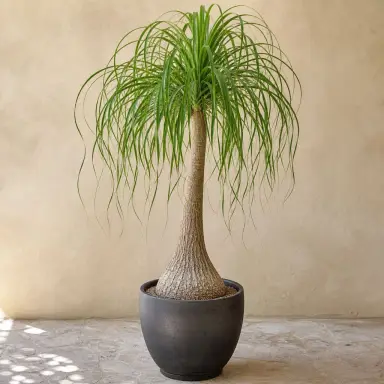 Whole plant
A Ponytail Palm shown in full — overall shape and habit.
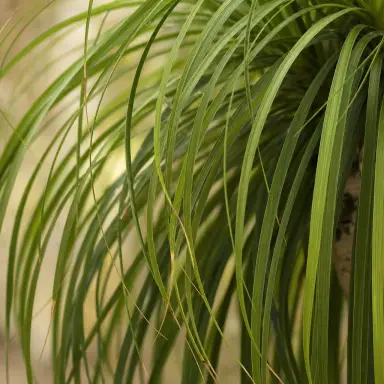 Leaf detail
Close-up of Ponytail Palm leaves — texture, color, and edges.
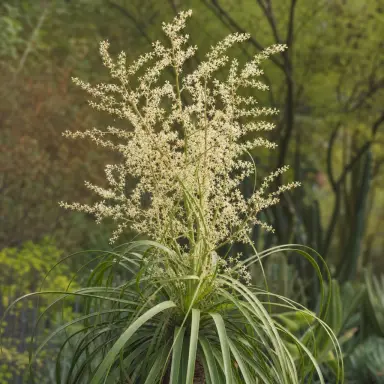 Flowers
Ponytail Palm in bloom — flower form and color.
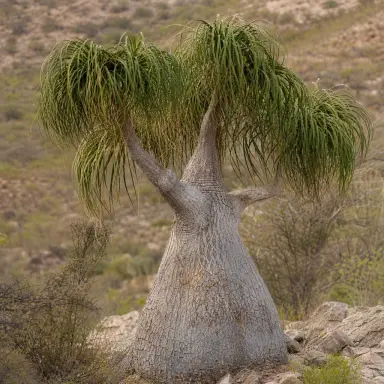 Growth form
Ponytail Palm growing habit — stems, base, and offsets.
History
A brief account
Ponytail Palm is a wonderfully deceptive succulent, with a swollen trunk and a fountain of long leaves that make it look like a tiny palm tree. It is not a palm at all but a member of the asparagus family, and its bulbous base stores water like a desert reservoir, helping it survive long dry spells. Slow-growing and long-lived, it has become famous for its almost immortal character, with wild specimens known to be over 350 years old. Its relaxed, architectural form makes it a favorite for indoor spaces where a touch of sculptural drama is wanted.
How to care for
Place Ponytail Palm according to its light needs: Bright direct sun; tolerates lower light indoors. For watering, deeply but rarely; let the soil dry entirely. For the potting medium, use fast-draining sandy mix. Good drainage is essential: let surplus water escape freely and never leave the roots standing in a wet saucer.
10–30°C. Light frost survivable when dry. Check the compost before watering instead of following a rigid calendar, since light, temperature, pot size and season all affect how quickly it dries. During slower growth, reduce watering and wait longer between drinks.
How to propagate
From seed, or from offsets from the base of mature plants. Propagation is most reliable during the plant's active growing season, when warmth and good light help new roots establish. Start with clean tools and healthy material, and keep the new plant in conditions appropriate for the parent.
Where a cutting or division creates a wound, allow the surface to dry before planting unless the method calls for immediate rooting in water or moist mix. Once roots form and fresh growth appears, gradually move the young Ponytail Palm into its normal watering routine; excess moisture is especially risky while the root system is still small.
Cultivation
Quick tips for care & planting
- Light
- Bright direct sun; tolerates lower light indoors.
- Water
- Deeply but rarely; let the soil dry entirely.
- Soil
- Fast-draining sandy mix.
- Temperature
- 10–30°C. Light frost survivable when dry.
- Propagation
- From seed, or from offsets from the base of mature plants.