Plate No. 51
Elephant's Foot
Dioscorea elephantipes
"A cracked tortoise-shell caudex and slender vine"
Native to
Western and Eastern Cape, South Africa

Identification
Is this your plant?
Compare these reference photographs to help identify a elephant's foot in your own collection.
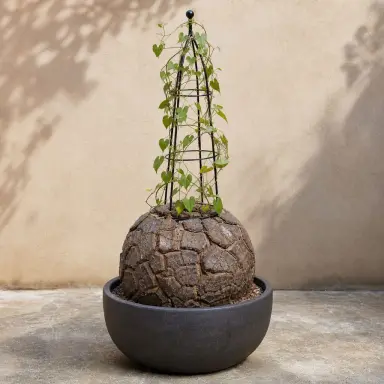 Whole plant
A Elephant's Foot shown in full — overall shape and habit.
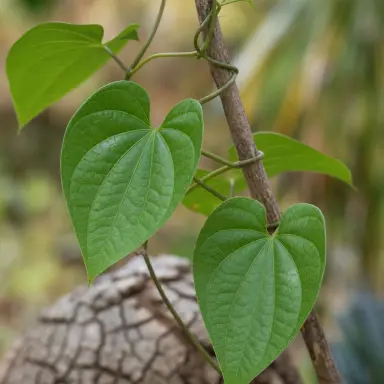 Leaf detail
Close-up of Elephant's Foot leaves — texture, color, and edges.
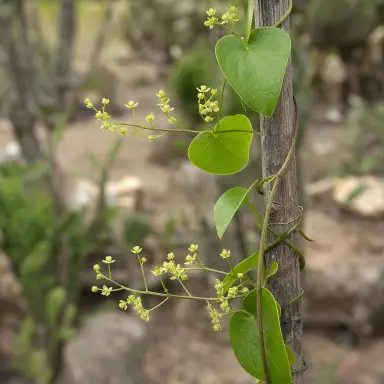 Flowers
Elephant's Foot in bloom — flower form and color.
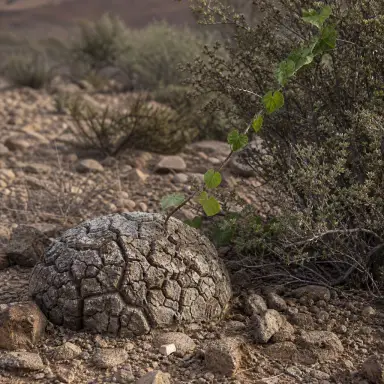 Growth form
Elephant's Foot growing habit — stems, base, and offsets.
History
A brief account
Elephant’s Foot (Dioscorea elephantipes) is one of the most ancient-looking and unusual caudiciform plants, native to the dry regions of South Africa. Its enormous swollen caudex develops a deeply cracked, corky surface resembling an elephant’s foot or a tortoise shell, giving rise to another common name, Tortoise Plant. Old specimens can survive for many decades—and potentially centuries—while the caudex gradually expands to an impressive size. Despite its rugged appearance, each growing season it produces a delicate climbing vine with attractive heart-shaped leaves, creating a remarkable contrast between the massive, prehistoric-looking base and its light, graceful foliage.
How to care for
Elephant’s Foot requires excellent drainage and careful attention to its unusual seasonal growth cycle. Unlike many succulents, it commonly grows during the cooler months and becomes dormant during warmer weather, although cultivated plants may follow their own schedule. Water regularly but moderately while the vine is actively growing, allowing the soil to dry between waterings. Once the foliage yellows and dies back, reduce watering significantly and keep the dormant caudex mostly dry. Provide bright light, some gentle sun and a support or small trellis for the climbing vine.
How to propagate
Elephant’s Foot is primarily propagated from seed. Fresh seeds are sown in a free-draining mix and kept lightly moist until germination, after which the young plants gradually begin developing their characteristic swollen base. Propagation requires patience: the spectacular cracked caudex forms slowly over many years, and each plant develops its own unique pattern and shape. Unlike many succulents, Elephant’s Foot cannot simply be multiplied from ordinary stem or leaf cuttings, making a mature specimen a true product of time.
Cultivation
Quick tips for care & planting
- Light
- Bright indirect light; morning sun.
- Water
- Regularly while the vine is in leaf; nothing while dormant.
- Soil
- Fast-draining mineral mix with the caudex sitting proud.
- Temperature
- 10–28°C. Frost-tender.
- Propagation
- From seed only; the caudex grows painfully slowly.