Plate No. 11
Century Plant
Agave americana
"A lifetime to bloom"
Native to
Highlands of Mexico, naturalised across the Mediterranean

Identification
Is this your plant?
Compare these reference photographs to help identify a century plant in your own collection.
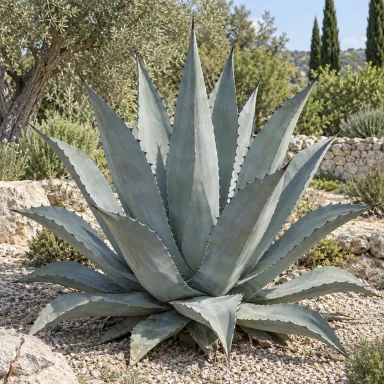 Whole plant
A Century Plant shown in full — overall shape and habit.
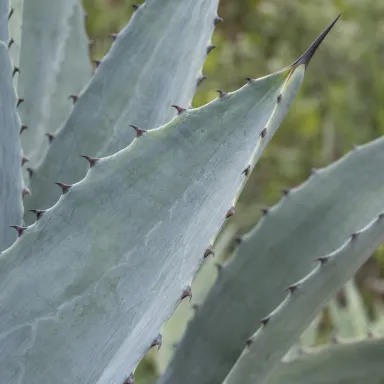 Leaf detail
Close-up of Century Plant leaves — texture, color, and edges.
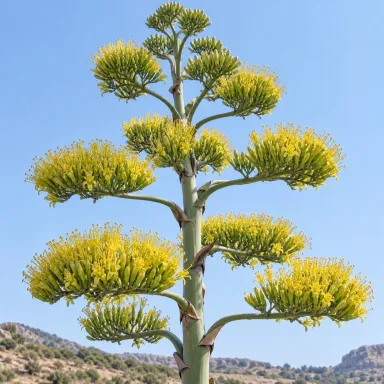 Flowers
Century Plant in bloom — flower form and color.
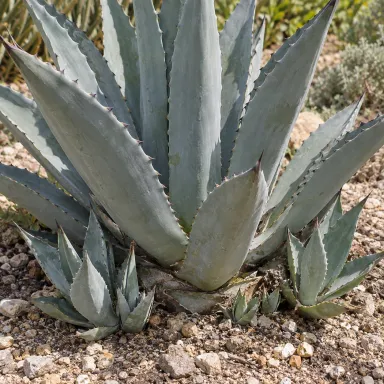 Growth form
Century Plant growing habit — stems, base, and offsets.
History
A brief account
Century Plant is one of the most dramatic succulents in cultivation, known for its bold rosette of thick, spined leaves and its habit of flowering only once after many years of growth. It is native to Mexico, where agaves have long been important to people for food, fibre, and ritual use, and the sap of certain species was fermented into pulque, a sacred drink in Aztec tradition. The plant’s size and architectural form made it especially memorable when it spread across the Mediterranean and other warm regions in the colonial era.
Although it is commonly called a century plant, it does not actually take a full hundred years to bloom in most cases; many specimens flower after a decade or two, while some take much longer depending on conditions. When it does bloom, the plant sends up a towering flower stalk before it eventually dies back, leaving behind offsets that carry the next generation forward.
In the garden or in a large container, it thrives in full sun, a very free-draining mineral-rich mix, and occasional deep watering rather than frequent small drinks. Mature plants are surprisingly tough and can handle heat and drought well, though they should be protected from cold and wet conditions. Offsets are the easiest way to propagate it and can be separated once they are well established.
How to care for
Place Century Plant according to its light needs: Full, direct sun — the more the better. For watering, deeply but rarely. Once monthly suffices outside of dormancy. For the potting medium, use sharp-draining mineral mix; a wide pot to support the rosette. Good drainage is essential: let surplus water escape freely and never leave the roots standing in a wet saucer.
10–32°C. Mature plants tolerate light frost. Check the compost before watering instead of following a rigid calendar, since light, temperature, pot size and season all affect how quickly it dries. During slower growth, reduce watering and wait longer between drinks.
How to propagate
Separate the offsets that emerge at the base of the parent once they have rooted and are large enough to handle. Propagation is most reliable during the plant's active growing season, when warmth and good light help new roots establish. Start with clean tools and healthy material, and keep the new plant in conditions appropriate for the parent.
Where a cutting or division creates a wound, allow the surface to dry before planting unless the method calls for immediate rooting in water or moist mix. Once roots form and fresh growth appears, gradually move the young Century Plant into its normal watering routine; excess moisture is especially risky while the root system is still small.
Cultivation
Quick tips for care & planting
- Light
- Full, direct sun — the more the better.
- Water
- Deeply but rarely. Once monthly suffices outside of dormancy.
- Soil
- Sharp-draining mineral mix; a wide pot to support the rosette.
- Temperature
- 10–32°C. Mature plants tolerate light frost.
- Propagation
- Separate the offsets that emerge at the base of the parent once they have rooted and are large enough to handle.