Plate No. 12
Ghost Plant
Graptopetalum paraguayense
"Pale rosette of the cliffs"
Native to
Cliffs of Tamaulipas, eastern Mexico

Identification
Is this your plant?
Compare these reference photographs to help identify a ghost plant in your own collection.
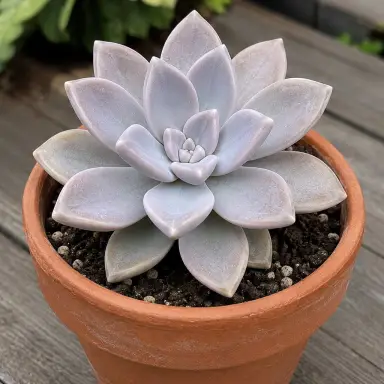 Whole plant
A Ghost Plant shown in full — overall shape and habit.
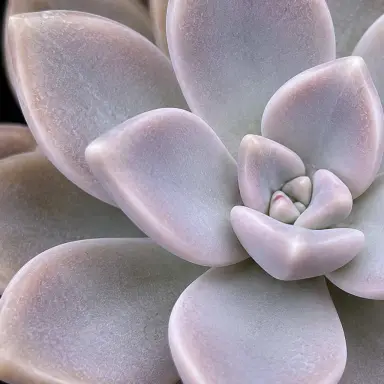 Leaf detail
Close-up of Ghost Plant leaves — texture, color, and edges.
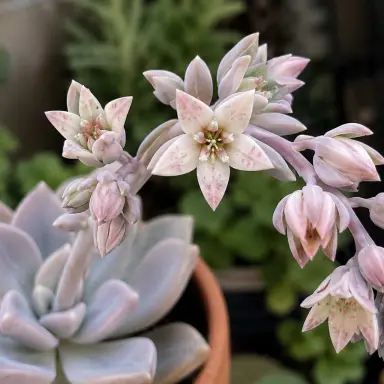 Flowers
Ghost Plant in bloom — flower form and color.
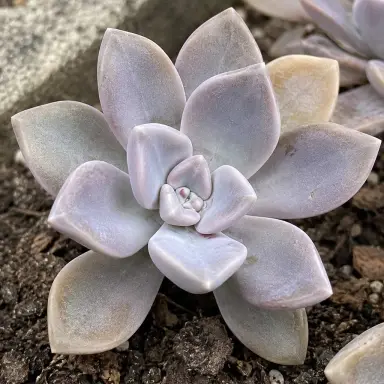 Growth form
Ghost Plant growing habit — stems, base, and offsets.
History
A brief account
Despite its species name, the Ghost Plant (Graptopetalum paraguayense) has no connection to Paraguay. Early botanical specimens were mistakenly labelled during shipment, leading to the misleading species epithet paraguayense. It was later determined that the plant is native to the rocky cliffs and canyon walls of northeastern Mexico, particularly in the states of Tamaulipas and Nuevo León. The error was finally corrected in the 20th century through the work of American botanist Eric Walther, who traced the plant back to its true Mexican origins.
Ghost Plant is one of the easiest succulents to grow, making it an excellent choice for beginners. Its fleshy, powder-coated leaves range from silvery-grey to pale lavender and blush pink, with colours becoming more vibrant in bright sunlight and cooler weather. The powdery white coating, known as farina, protects the leaves from intense sun and water loss, so it’s best to avoid touching the foliage as fingerprints permanently mark the protective layer.
In spring and early summer, mature plants produce graceful flower stalks bearing clusters of small, star-shaped flowers. Each flower has five creamy-white petals lightly speckled with red or pink, attracting bees and other pollinating insects.
Ghost Plants thrive in full sun to bright indirect light and require excellent drainage. A gritty cactus or succulent potting mix is ideal, especially when grown in terracotta pots, which allow excess moisture to evaporate. Water thoroughly only after the soil has completely dried out, as overwatering is the most common cause of failure. During winter, watering should be reduced significantly while the plant is semi-dormant.
One of the Ghost Plant’s most remarkable features is its ability to propagate. Even a single healthy leaf that falls onto dry soil can develop roots and eventually form a completely new rosette. Mature plants also produce offsets and sprawling stems that root readily wherever they touch the ground, allowing them to spread into attractive colonies with very little effort.
Hardy in frost-free climates, Ghost Plant can be grown outdoors year-round in warm regions or kept as an indoor houseplant in cooler areas. With plenty of sunlight, occasional watering, and well-drained soil, it will reward growers with years of colourful foliage and delicate seasonal flowers.
How to care for
Place Ghost Plant according to its light needs: Bright light. Colour deepens to lavender-pink in strong sun. For watering, every two to three weeks once soil is fully dry. For the potting medium, use coarse succulent mix with pumice and sand. Good drainage is essential: let surplus water escape freely and never leave the roots standing in a wet saucer.
10–27°C. Among the more cold-tolerant succulents. Check the compost before watering instead of following a rigid calendar, since light, temperature, pot size and season all affect how quickly it dries. During slower growth, reduce watering and wait longer between drinks.
How to propagate
Fallen leaves and stem cuttings root almost effortlessly. Propagation is most reliable during the plant's active growing season, when warmth and good light help new roots establish. Start with clean tools and healthy material, and keep the new plant in conditions appropriate for the parent.
Where a cutting or division creates a wound, allow the surface to dry before planting unless the method calls for immediate rooting in water or moist mix. Once roots form and fresh growth appears, gradually move the young Ghost Plant into its normal watering routine; excess moisture is especially risky while the root system is still small.
Cultivation
Quick tips for care & planting
- Light
- Bright light. Colour deepens to lavender-pink in strong sun.
- Water
- Every two to three weeks once soil is fully dry.
- Soil
- Coarse succulent mix with pumice and sand.
- Temperature
- 10–27°C. Among the more cold-tolerant succulents.
- Propagation
- Fallen leaves and stem cuttings root almost effortlessly.