Plate No. 03
Aloe Vera
Aloe barbadensis miller
"The plant of immortality"
Native to
Arabian Peninsula, now naturalised across North Africa and the Mediterranean

Identification
Is this your plant?
Compare these reference photographs to help identify a aloe vera in your own collection.
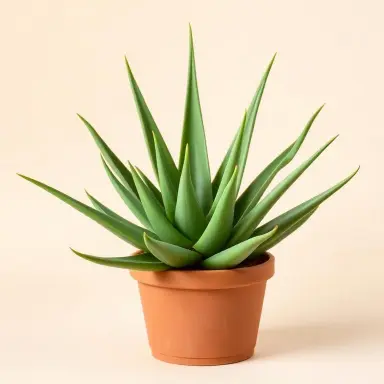 Whole plant
A Aloe Vera shown in full — overall shape and habit.
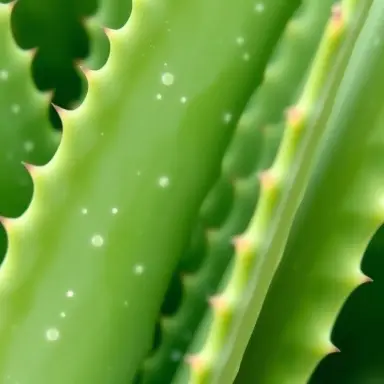 Leaf detail
Close-up of Aloe Vera leaves — texture, color, and edges.
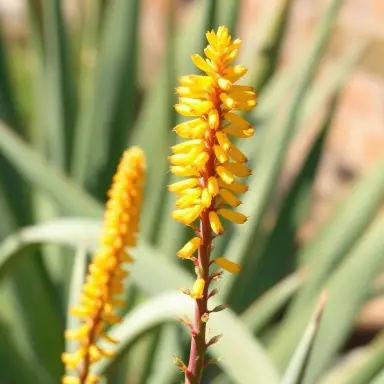 Flowers
Aloe Vera in bloom — flower form and color.
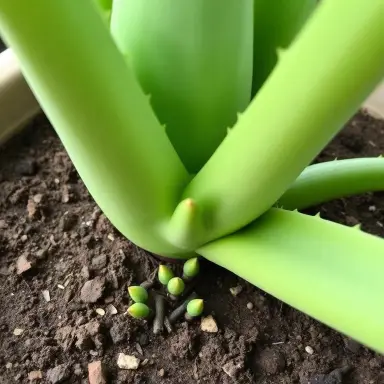 Growth form
Aloe Vera growing habit — stems, base, and offsets.
History
A brief account
Aloe vera (Aloe barbadensis Miller) has been valued for more than 4,000 years, making it one of the oldest cultivated medicinal plants in the world. It appears on Sumerian clay tablets dating to around 2100 BCE and was later celebrated by the ancient Egyptians as “the plant of immortality.” In Egypt, aloe symbolised renewal, beauty and protection, and was sometimes included in funerary rituals as an offering for the afterlife. Cleopatra is reputed to have used its cooling gel as part of her daily skincare routine, while Alexander the Great is said to have relied on aloe to treat his soldiers’ wounds during military campaigns. Over the centuries, the plant spread throughout the Mediterranean, Asia and eventually the Americas, becoming an important part of traditional medicine in many cultures.
Today, Aloe vera is one of the world’s most widely recognised succulents. Its thick, fleshy leaves contain a clear gel traditionally used to soothe minor burns, sunburn, insect bites, dry skin and minor abrasions. The gel is also a common ingredient in modern cosmetics, moisturisers, after-sun lotions, soaps, shampoos and herbal skincare products. Beyond its practical uses, Aloe vera is prized as an attractive architectural plant that combines beauty with exceptional drought tolerance.
How to care for
Aloe vera is among the easiest succulents to grow. It thrives in bright light or full sun and prefers a free-draining cactus or succulent potting mix. Allow the soil to dry out completely between waterings, then water thoroughly before allowing it to dry again. Overwatering is the most common cause of failure, particularly during winter when the plant’s growth slows considerably. Terracotta pots are ideal because they allow excess moisture to evaporate and help keep the roots healthy. During spring and summer, an occasional feed with a diluted cactus fertiliser will encourage vigorous growth. Mature plants can live for many years, eventually producing impressive rosettes of blue-green leaves and tall spikes of yellow tubular flowers.
How to propagate
One of Aloe vera’s greatest attractions is how readily it multiplies. Mature plants produce offsets, commonly called “pups,” around the base of the parent plant. Once these offsets have developed several leaves and their own roots, they can be carefully separated with a clean knife and replanted in individual pots. Allow any cut surfaces to dry and callus for a day before planting to reduce the risk of rot. Although Aloe vera can be grown from seed, propagation by offsets is much faster and preserves the characteristics of the parent plant. With good care, a single aloe can produce numerous pups over its lifetime, making it an ideal plant for sharing with family and friends.
Cultivation
Quick tips for care & planting
- Light
- Bright, indirect light — leaves redden in harsh midday sun.
- Water
- Deeply but infrequently; every three weeks suffices in summer, less in winter.
- Soil
- Well-draining cactus or succulent mix.
- Temperature
- 13–27°C. Tolerates short cool snaps but not frost.
- Propagation
- Separate offsets (pups) from the base of the parent plant.