Plate No. 04
Zebra Haworthia
Haworthiopsis attenuata
"Striped sentinel of the veld"
Native to
Eastern Cape of South Africa, in rocky quartz outcrops

Identification
Is this your plant?
Compare these reference photographs to help identify a zebra haworthia in your own collection.
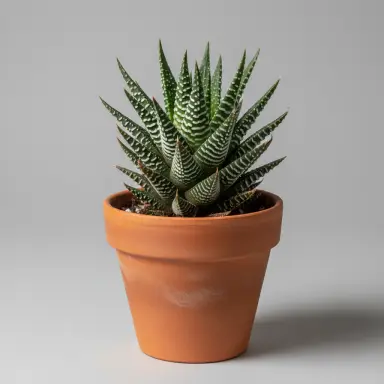 Whole plant
A Zebra Haworthia shown in full — overall shape and habit.
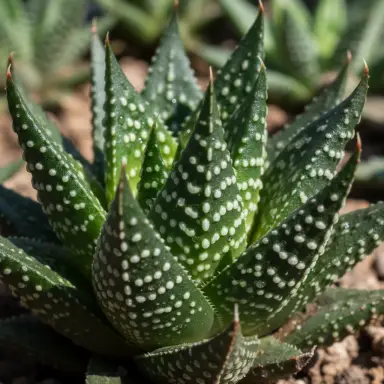 Leaf detail
Close-up of Zebra Haworthia leaves — texture, color, and edges.
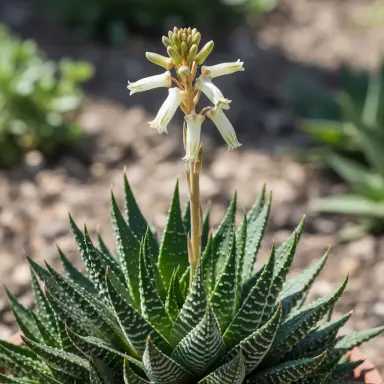 Flowers
Zebra Haworthia in bloom — flower form and color.
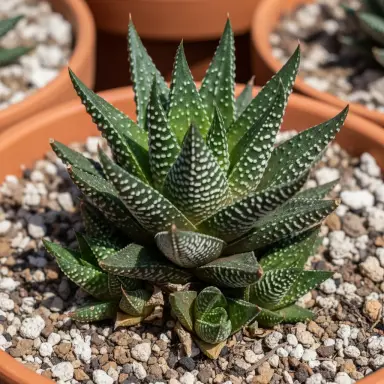 Growth form
Zebra Haworthia growing habit — stems, base, and offsets.
History
A brief account
Zebra Haworthia (Haworthiopsis attenuata, formerly Haworthia attenuata) is one of the world’s most recognisable small succulents, admired for its compact rosette of dark green leaves decorated with raised white bands that resemble zebra stripes. Native to the rocky, quartz-rich landscapes of South Africa’s Eastern Cape, it has adapted to survive intense sunlight, nutrient-poor soils and long periods of drought. In its natural habitat it often grows partially sheltered beneath shrubs or wedged between rocks, where its striped leaves help it blend into the surrounding landscape.
The genus was named in honour of the English botanist Adrian Hardy Haworth, who helped classify many succulent plants during the early 19th century. Although long known as Haworthia attenuata, modern botanical research has placed this species in the genus Haworthiopsis. Zebra Haworthia became highly prized by Victorian collectors because its bold markings and compact size made it ideal for conservatories and indoor plant collections. Today it remains one of the most popular succulents worldwide, valued for its architectural form, exceptional durability and suitability for homes, offices and small spaces.
How to care for
Zebra Haworthia is an easy-care succulent that thrives in bright, indirect light or gentle morning sun. Unlike many desert succulents, it appreciates some protection from harsh afternoon sunlight, which can cause the leaves to become scorched or reddish. Plant it in a free-draining cactus or succulent mix and always use a pot with good drainage. Water thoroughly only when the soil has dried out completely, then allow it to dry again before the next watering. During winter, reduce watering significantly while growth slows.
This slow-growing plant rarely exceeds 15 cm (6 inches) in height, making it perfect for windowsills, desks and small containers. Healthy plants occasionally produce slender flower spikes bearing tiny white tubular flowers during spring or summer, although they are grown primarily for their striking foliage. With good light and careful watering, Zebra Haworthia can remain attractive for many years with very little maintenance.
How to propagate
Zebra Haworthia is one of the easiest succulents to propagate. Mature plants naturally produce offsets, or “pups,” around the base of the main rosette. These can be carefully separated during spring or early summer once they have developed their own roots, then replanted into fresh succulent mix. Allow any damaged roots or cut surfaces to dry for a day before planting to reduce the risk of rot.
Although propagation from individual leaves is possible, it is slower and generally less reliable than using offsets. Like most succulents, success depends on allowing cuttings to callus before placing them onto well-drained soil and watering sparingly until roots develop. Given time, a single Zebra Haworthia will gradually form an attractive clump of rosettes, making it an excellent plant for sharing or expanding a collection.
Cultivation
Quick tips for care & planting
- Light
- Bright, indirect light. Tolerates lower light better than most succulents.
- Water
- Modest sips every two to three weeks once soil is dry.
- Soil
- Mineral-heavy mix with pumice, sand, and a little compost.
- Temperature
- 10–27°C. Hardier than its delicate appearance suggests.
- Propagation
- Separate offsets from the base in spring, let the cut ends callus for a day or two, then pot them into gritty, fast-draining soil.