Plate No. 09
Christmas Cactus
Schlumbergera × buckleyi
"Bloom of the long nights"
Native to
Cloud forests of the Serra dos Órgãos, southeastern Brazil

Identification
Is this your plant?
Compare these reference photographs to help identify a christmas cactus in your own collection.
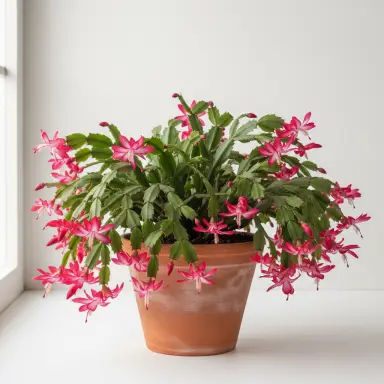 Whole plant
A Christmas Cactus shown in full — overall shape and habit.
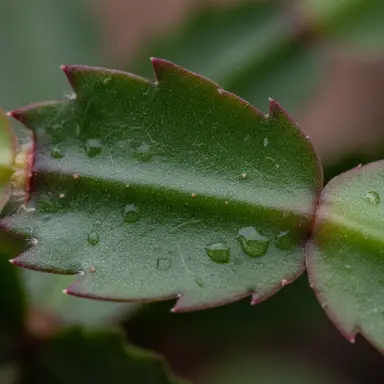 Leaf detail
Close-up of Christmas Cactus leaves — texture, color, and edges.
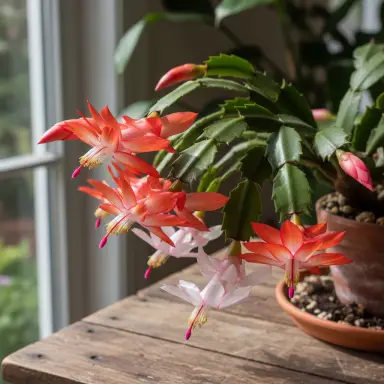 Flowers
Christmas Cactus in bloom — flower form and color.
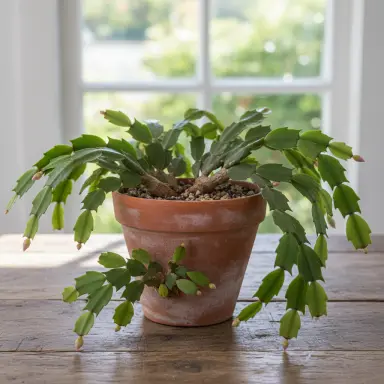 Growth form
Christmas Cactus growing habit — stems, base, and offsets.
History
A brief account
Christmas Cactus (Schlumbergera × buckleyi) is cherished for flowering during the darkest weeks of the year, producing a spectacular display of pink, red, white or occasionally purple blooms when most other houseplants are dormant. Unlike desert cacti, it is native to the cool, misty cloud forests of southeastern Brazil, where it grows as an epiphyte on tree branches and moss-covered rocks. In this humid environment, its flattened stems absorb moisture from frequent rainfall and humid air while its roots anchor into pockets of organic debris rather than soil.
The Christmas Cactus familiar today is a Victorian hybrid developed in England during the mid-19th century by nurseryman William Buckley, who crossed two Brazilian Schlumbergera species to create a plant with graceful arching stems and flowers that bloom around Christmas in the Northern Hemisphere. Over time it became one of the world’s best-loved holiday houseplants and is often passed from one generation to the next. Many family plants have survived for decades, and some heirloom specimens are said to be more than 100 years old, flowering faithfully each winter.
How to care for
Although it is a succulent, Christmas Cactus has different needs from most cacti because of its rainforest origins. It thrives in bright, indirect light and appreciates higher humidity than desert species. A loose, airy potting mix containing orchid bark, perlite and quality potting compost closely mimics its natural growing conditions and allows its roots to breathe. Keep the soil lightly moist during the growing season, allowing only the top layer to dry before watering again, but never leave the pot standing in water.
To encourage flowering, provide cooler temperatures and slightly shorter days during autumn while reducing watering for several weeks. Once flower buds begin to form, avoid moving or rotating the plant, as sudden changes in light or temperature may cause the buds to drop. After flowering, the plant benefits from a short resting period before resuming normal watering and feeding in spring. With good care, Christmas Cactus can bloom reliably every year and become increasingly impressive as it matures.
How to propagate
Christmas Cactus is one of the easiest flowering houseplants to propagate. Simply twist or snap off a healthy stem containing two to four stem segments and allow the cutting to dry for a day or two so the cut end can callus. Insert the cutting just deep enough to support itself in a lightly moist, free-draining potting mix, and keep it in a warm, bright position out of direct sunlight.
Roots usually develop within a few weeks, after which new growth begins to appear at the tips of the segments. Planting several cuttings together in the same pot produces a fuller specimen more quickly. Because the plant roots so readily, it has long been shared between friends and family, helping many treasured Christmas Cactus plants remain in cultivation for generations.
Cultivation
Quick tips for care & planting
- Light
- Bright, indirect light. Direct sun bleaches its segments.
- Water
- Keep evenly moist while flowering; let it dry between waterings otherwise.
- Soil
- Loose, slightly acidic mix with orchid bark or coco coir.
- Temperature
- 16–21°C. Cool nights in autumn trigger buds.
- Propagation
- Snap off a Y-shaped segment, let it callus briefly, then root it in a lightly moist mix.