Plate No. 07
Snake Plant
Dracaena trifasciata
"Mother-in-law's tongue"
Native to
Tropical West Africa, from Nigeria to the Congo basin

Identification
Is this your plant?
Compare these reference photographs to help identify a snake plant in your own collection.
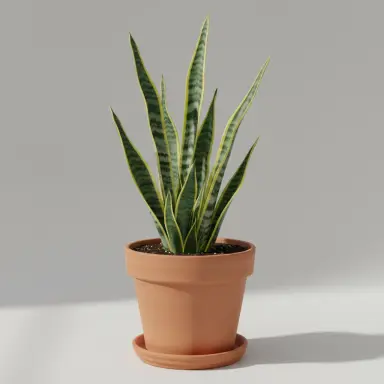 Whole plant
A Snake Plant shown in full — overall shape and habit.
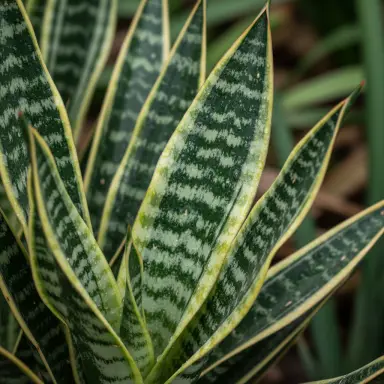 Leaf detail
Close-up of Snake Plant leaves — texture, color, and edges.
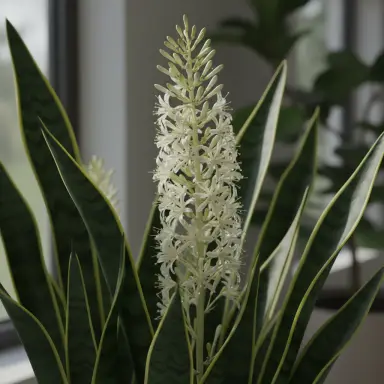 Flowers
Snake Plant in bloom — flower form and color.
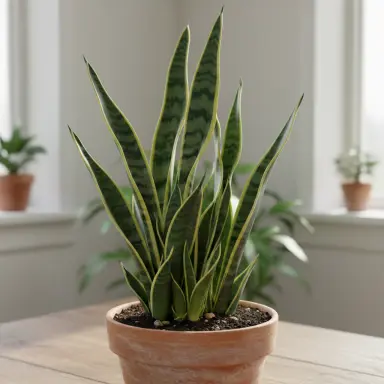 Growth form
Snake Plant growing habit — stems, base, and offsets.
History
A brief account
Snake Plant (Dracaena trifasciata, formerly Sansevieria trifasciata) is one of the world’s most dependable and recognisable houseplants, valued for its upright sword-like leaves, sculptural form and remarkable resilience. Native to the dry tropical regions of West Africa, it grows naturally in sandy, nutrient-poor soils where it survives long periods of drought by storing water in its thick, fleshy leaves. For centuries, local communities cultivated the plant not only as an ornamental but also for the exceptionally strong fibres extracted from its leaves, which were traditionally used to make bowstrings, rope and woven products. This earned it the common name “Bowstring Hemp.”
The plant reached European botanical collections during the 18th century and quickly became a favourite in Victorian glasshouses for its striking architectural appearance and ability to thrive indoors. In recent years, it gained even greater popularity after NASA’s Clean Air Study identified it as one of several houseplants capable of removing certain airborne compounds under laboratory conditions. Although its real-world effect on indoor air quality is modest, Snake Plant remains a favourite because of its exceptional toughness, modern appearance and ability to tolerate conditions that would challenge many other houseplants.
How to care for
Snake Plant is one of the easiest indoor plants to grow, thriving in everything from bright, indirect light to surprisingly low-light conditions. While brighter positions encourage faster growth and stronger leaf colour, it will happily tolerate offices, hallways and shaded rooms where many other plants struggle. Plant it in a free-draining cactus or succulent mix and water only when the soil has dried out completely. During winter, watering should be reduced even further, as overwatering is by far the most common cause of problems.
Its upright leaves grow from underground rhizomes and can eventually reach over one metre in height, depending on the variety. Mature plants occasionally produce spikes of fragrant greenish-white flowers, particularly when slightly root-bound. Snake Plants are exceptionally tolerant of dry indoor air, fluctuating temperatures and periods of neglect, making them one of the best choices for beginners and busy plant owners.
How to propagate
Snake Plants spread naturally by underground rhizomes, making division the quickest and most reliable way to create new plants. When repotting, simply separate a healthy section with roots attached and pot it into fresh, well-drained soil. The new division will usually resume growth with very little interruption.
Leaf cuttings are another popular method. A healthy leaf can be cut into sections, allowed to dry for several days, then inserted upright into gritty succulent mix or rooted in water. New shoots eventually emerge from the base of the cutting, although this process requires patience and may take several months. It’s worth noting that variegated cultivars propagated from leaf cuttings often lose their yellow margins, so division is the preferred method when preserving the parent plant’s distinctive colouring.
Cultivation
Quick tips for care & planting
- Light
- Tolerates almost any light, from deep shade to bright sun.
- Water
- Every three to four weeks. Roots rot quickly if kept damp.
- Soil
- Free-draining cactus mix in a heavy pot to balance its tall leaves.
- Temperature
- 16–27°C. Avoid drops below 10°C.
- Propagation
- Divide rhizomes in spring, or root leaf cuttings in water or dry soil after letting the cut edge callus for a few days.